Q+A with Dean Jason Shepard
The Dean of the College of Communications on what unites its programs and how the college prepares students for careers that may look very different in a decade.
Hosted by Managing Editor Gregory Ferraro for ProComm Magazine
As it ran in print
Q The College of Communications is one of the most diverse colleges on campus. How do you describe the value of having journalism, PR, advertising, entertainment, Comm Disorders, Human Comm and CTVA all under one umbrella?
A That diversity is truly one of our strengths. As the only College of Communications in the CSU system, we have a unique breadth that allows students to explore communications from multiple perspectives. On the one end, we have programs like Communication Sciences and Disorders, which focus on how people develop and regain the ability to communicate. On the other end, you have large-scale storytelling and media production in areas like journalism, advertising, and cinema and television. We have areas where students learn how to communicate across contexts, from international interactions to intercultural and global media systems. Our college really does run the gamut in terms of what communication means.
Q What do you think unites the programs and gives the College of Communications its shared identity?
A While each department has its own focus and professional pathways, what unites us is a shared commitment to ethical and effective communication. Our students learn to tell stories, advocate for clients and analyze human interactions. They engage with questions about responsibility, impact and professionalism. The combination of professional readiness and ethical responsibility is really at the heart of who we are as a college.
Q As industries evolve rapidly, how is the college adapting its curriculum and approach to prepare students for careers that may look very different in the next decade?
A The pace of change in the communications landscape is fast, and we have to be constantly thinking ahead and innovating our curriculum and programs and the opportunities we provide for our students. Our faculty are deeply engaged in both scholarship and professional practice. That helps ensure what we’re teaching is relevant and forward-looking.
Q When you look at the College of Communications as a whole, what do you see as its core mission for students entering today’s communication-driven world?
A In a world where communications shapes everything from democracy to culture and technology, we want our students to be both highly skilled and deeply responsible communicators. We are grounded in a broad, liberal arts tradition that emphasizes critical thinking, ethical decisionmaking and adaptability. Our mission is to prepare students not just for jobs, but to be critical consumers, practitioners and leaders in a communications-driven society.
Q Experience based learning has become a defining part of the college. What drives your commitment to supporting trips like San Francisco, New York, Milan, Greece and other immersive opportunities?
A Students learn a lot in the classroom, but those lessons really come to life when they’re applied in the real world. Experiences like covering the Olympics or competing in state or international competitions allows students to connect theory and practice in powerful ways and sometimes gain once-in-a-lifetime experiences.
Q How do donor contributions directly support student programs, travel opportunities and hands-on experiences across the college?
A Our donors are absolutely essential to what we’re able to offer. Their support helps funds scholarships, student travel, equipment, programming and hands-on learning opportunities that otherwise might be out of reach. What’s meaningful is that donors give for different reasons. Some see the impact our students are making. Others are alumni who want to give back. Many are former faculty and staff who remain deeply connected to our mission. One of the most rewarding parts of my role is connecting donors with programs and initiatives that align with their passions and seeing the direct impact their support has on student success.
Q Looking ahead, what are you personally hoping to build, strengthen or introduce within the College of Communications over the next few years?
A I want to continue to build on our strong foundations. That means supporting our faculty as they innovate in teaching and research, ensuring our curriculum stays relevant, and expanding opportunities for students to gain real-world experience. A key priority for me is access, making sure all students can take advantage of high-impact opportunities without taking on significant financial burden. Many of our students can graduate with little to no debt while getting a world-class education. I want to leverage that as one of our greatest strengths.
Q Who are the individuals in your circle, like faculty, staff, advisors, coordinators, that you depend on to keep the College of Communications running and to help carry out this vision?
A Our college is built on the hidden labor of so many people. That includes our amazing advising team that meets with thousands of students a year to make sure that they’re getting into the classes that they need. It’s the staff, some of whom have been here more than 30 years who show up every single day to make sure that all of the infrastructure is working for our faculty and our students. Our faculty are people who dedicate their lives to wanting to make a positive difference for our students. I think all of us are here because we really feel like the students are the best part of our jobs.
Q What do you think students often overlook or misunderstand about the breadth of opportunities available within the college?
A One thing I sometimes hear from graduating students is they wish they had known earlier about all the opportunities available to them. On one hand, that speaks to the richness of what we offer, but on the other, it’s a reminder we could do a better job connecting students to those opportunities earlier. My goal is for students to engage early and often through our student clubs, organizations and signature programs. The earlier they get involved, the more they can take full advantage of everything the college has to offer, and the more prepared they’ll be when they graduate.
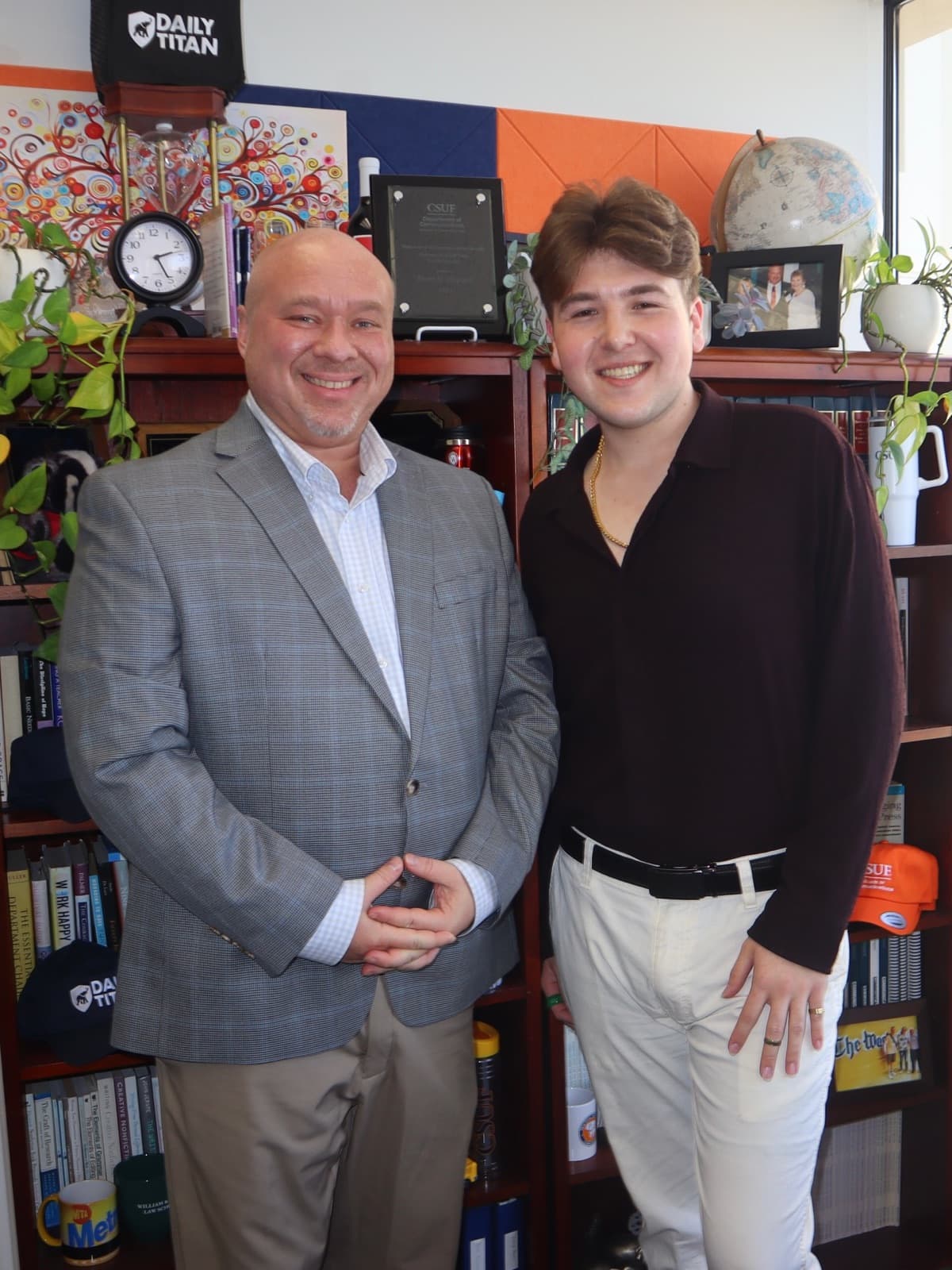
With Dean Jason Shepard
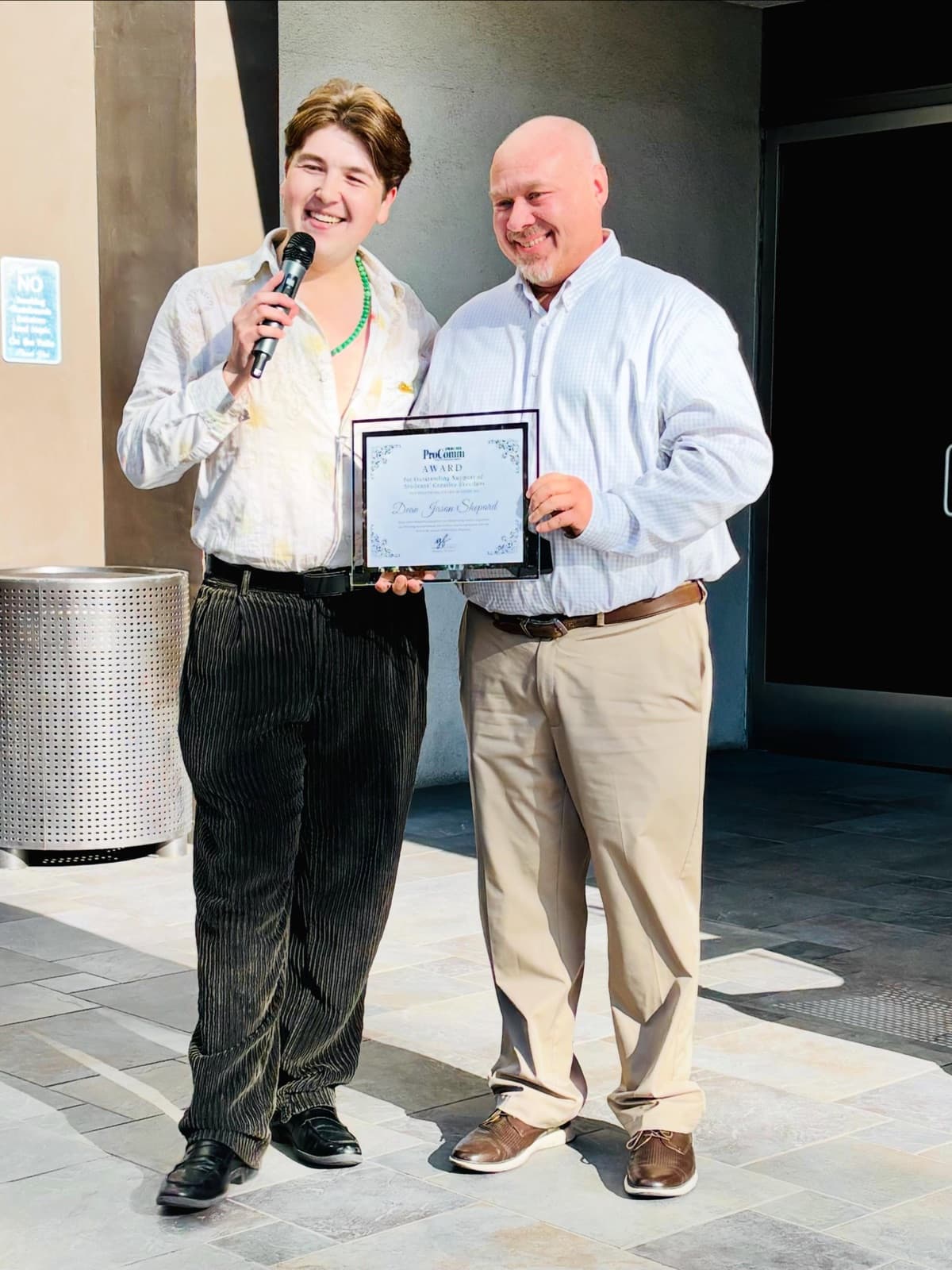
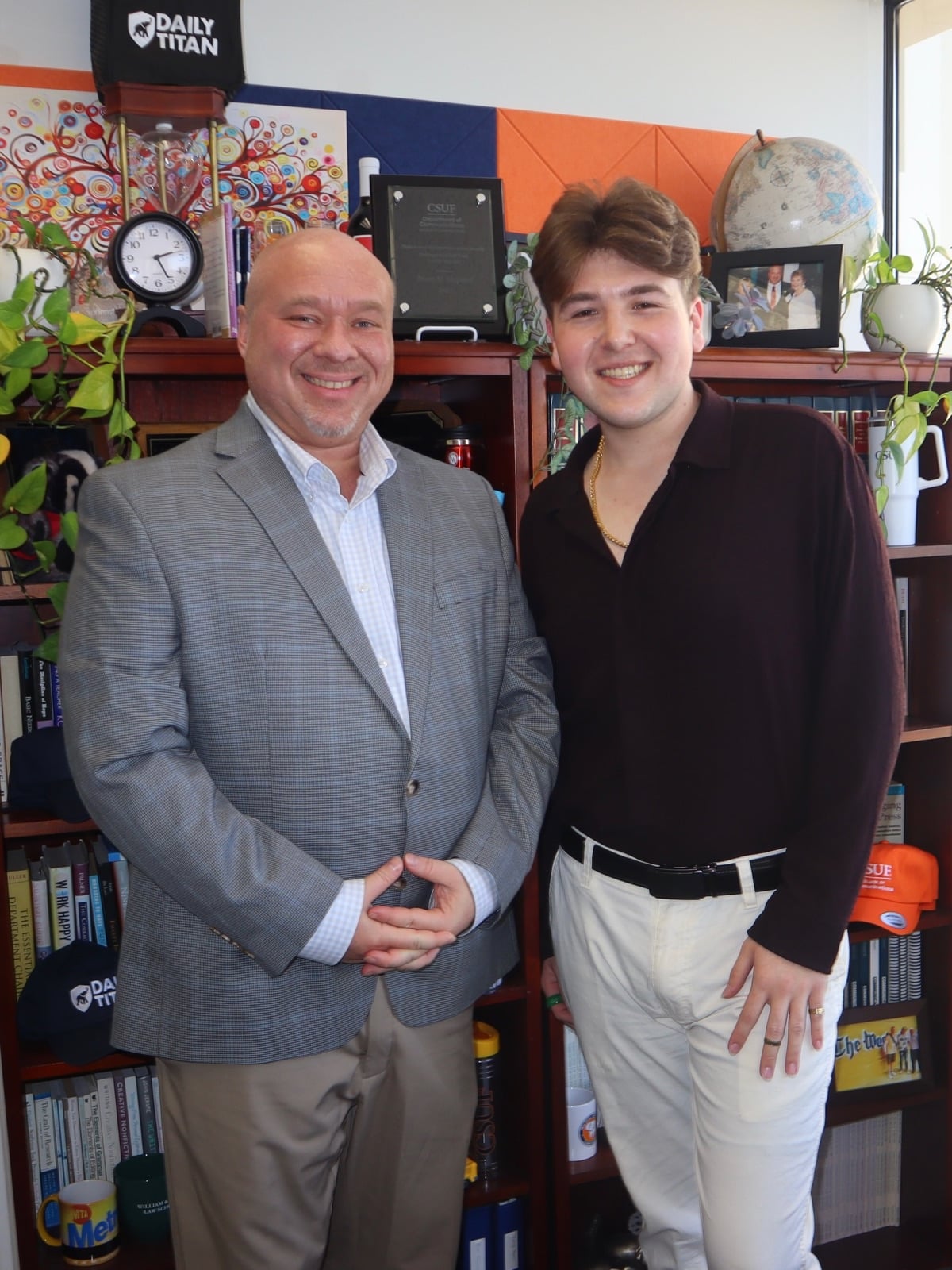
From the interview in his office to launch night, where the dean was recognized for his support of students’ creative freedom.
From ProComm and Dean Shepard on Instagram