
Motivation, Accountability & Mentorship: An Ethnography of a Graduate and His Advisor
Verbal and nonverbal cues between an upcoming graduate and his academic advisor, read through Dell Hymes’ S.P.E.A.K.I.N.G. model.
Written by Gregory Ferraro for GF Creative House Blog
Introduction
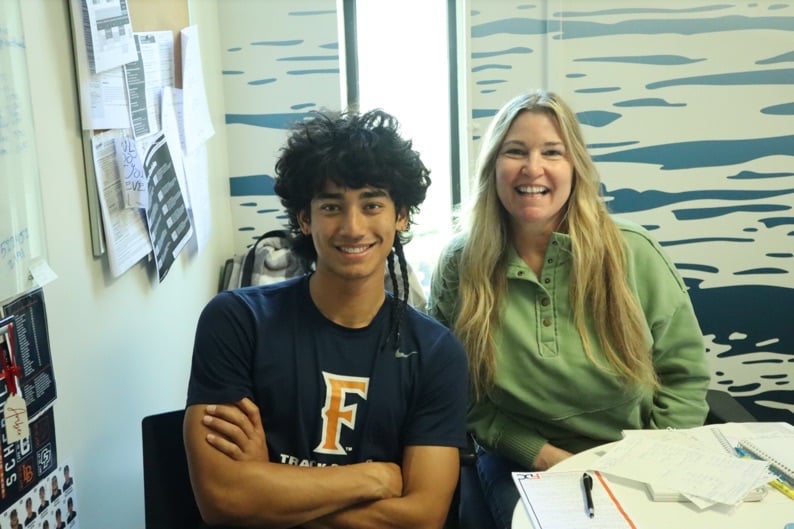
Throughout this ethnography of communication, Camren Willis, a student at Cal State Fullerton, and Amber Perez, a student-athlete learning specialist, are examined to reveal the different social cues and conversation approaches of a student compared to a faculty member on a college campus. Willis has visited Perez regularly over his four years at school, and she has become one of his most trusted advisors and mentors.
Each week, Willis meets with Perez, and one of these meetings is the focus of this ethnography. The conversation is significant due to the strong bond formed between them and the fact that the foundation is built on accountability and trust. For academic advisors, sometimes the most necessary words are the hardest to say. For students, being honest about your academic progress can be equally as difficult. Willis and Perez are no different. His drive for success and her ability to organize and guide him to cultivate it creates for an inspiring interaction.
Using Dell Hymes’ “S.P.E.A.K.I.N.G.” model, the scene and setting, participants, ends, act sequence, key, instrumentalities, norms, and genre of their conversation are analyzed to better understand the communication techniques used and the motivations behind them (Hymes, 1974).
S.P.E.A.K.I.N.G. Framework
S, Setting and Scene
March 17, 2025, was a warm and sunny day on campus at Cal State Fullerton. The meeting took place in Langsdorf Hall just before noon. In one of the eight-by-eight-foot rooms in a multi-unit office suite, Amber Perez has made her little corner feel like home.
With a plush lounge-chair, jars of candy, and candid photos of countless students and collogues covering the walls, this office invites students in and instantly makes them feel comfortable. The fluorescent ceiling-lights are turned off and soft white lamps mixed with the light that beams through the sheer curtains created a peaceful ambiance.
A humidifier with lemon essential oil filled the room and contribute to the calm vibe. Sitting in her black memory foam office chair is Perez. Across from her in the lounge-chair is Willis. With her desk between them, Willis plops his laptop down and opens up his canvas while Perez prepares her document to update with his new information.
P, Participants
Amber Perez is a student-athlete learning specialist at Cal State Fullerton who works with students to help foster a positive balance with sports and academics by guiding and organizing their immense workload. With her position she focuses on creating detailed calendars and progress reports to ensure that her students can juggle their immense workload alongside their athletic commitments.
Camren Willis, 21, is co-captain of Cal State Fullerton’s jump team and is double majoring in communications: public relations and business marketing. He is on course to graduate in 2025 and has plans to move to Nashville, Tennessee to pursue public relations in the music industry. Because of his ambitious nature, Willis values and prioritizes these meetings and the help that advisors like Perez offer.
E, Ends
Since this is Willis’ last semester, organizing and tracking all of his assignments and upcoming projects is vital in planning out his weeks. With practice every weekday from 1:00-5:00pm, and tournaments and meets nearly every weekend causing him to travel, this strict schedule is something Willis depends on. For Perez, keeping her students on track can pose its struggles. When a student like Willis is spread so thin, she sets up these weekly meetings to track and re-enforce the drive in Willis.
This interaction is information in the sense that Willis leaves knowing what he needs to know to be able to manage his schedule but is also social in that sometimes he just needs an ear to vent to. Perez fosters such an inviting and relaxed environment that he is so comfortable as to even curse in front of her cheekily.
A, Act Sequence
Within the almost 15-minute meeting, Perez helped Willis organize his week while simultaneously offering some stress relief through understanding and kindness.
They began with a “small talk” type of conversation, catching up from their meeting last week. They also frequently found each-other laughing and conversing like “old friends.” They even reminisced about the nearly four years that they have been having these meetings.
Then, Willis went over assignments he had just turned in, explaining and reflecting about his grades with Perez. She then went through his upcoming assignments and created a practical schedule to complete them alongside his upcoming track meets.
The Conversation ended with them planning to meet the following week and Perez printed out Willis’ schedule alongside his assignment to-do list she created.
K, Key
From Willis, excitement paired with fear for what’s to come exudes. Going through his seemingly endless list of assignments and comparing it with his back-to-back schedule with athletics, he is frantic. He has so much to look forward to and speaks about his future as if he can see it, but his joy is spread so thin under this much pressure.
Perez leads the conversation with an inspiring and practical spirit that aims to hold Willis accountable to graduate on track. She keeps him engaged through getting him to talk through what he is struggling with. As she hears his responses she actively listens and recommends solutions that can guide him to find the right path.
While Willis is in a high-pressure situation, the trust that he has in the assistance offered by his advisor helps him keep his cool. She doesn’t shame any mistakes or struggles that he presents to her, but instead only offers support and understanding.
He receives her words with reverence and truly applies advice actively, setting up future meetings and planning out his personal calendar in the moment. The conversation showcases mutual respect and active interest through these actions and the tone they create.
I, Instrumentalities
The conversation involved verbal communication and nonverbal cues. Neither of them interrupted the other or created a negative energy, but the colossal workload for Willis to plan, weighed on his reactions.
Perez worked to explain and breakdown all of Willis’ upcoming assignments and often he would just nod or shrug when asked questions about if he has started them.
The reactions he portrayed seemed to stem from his fear of letting down Perez. This reaction shows the strength of their bond and the importance that Willis holds to Perez’s opinion of him.
These reactions showcased a fear of disappointing Perez. This highlighted the depth of their mentor-mentee relationship. Multiple subtle cues like these emphasized how emotional connection influences communication.
N, Norms
Usually within a communication situation between a student and an academic faculty member, there is a sense of code-switching by one or both parties because of an implied power dynamic. People will, “often choose to code-switch as a means of asserting identity, aligning with a particular group, or managing the power dynamics within a conversation” (El Saghir 2017).
This is not only expected between these polar social groups but upheld continuously in our society. Especially for students, changing vernacular and speaking with a more eloquent tone is expected. For Willis and Perez though, this is not the case. Willis refers to Perez by her first name and even feels comfortable using slang and curse words in front of her.
Similarly, Perez has a comedic and fun spirited personality that doesn’t leave her while on the job. She laughs at Willis’ remarks and even contributes some funny jokes throughout their meeting.
G, Genre
While this communication event was intended to be a service, it extended far beyond that. Perez is here for students like Willis for support in their academics, but her work with him extends beyond academics, motivating him to pursue success.
Willis makes time every week for these meetings even if he just squeezes in 15 minutes like this occasion. Perez makes her schedule adaptable for his spontaneous meetings and truly puts interest and care in them.
Perez’s investments into Willis provide him with a plan and motivate him, through hard work, to strive for the success he craves. It’s clear that she expects of the best of him and that he wants to maintain that view in her mind.
Cultural and Social Analysis
Countless direct and indirect communication styles are demonstrated by both parties within this meeting. With Perez being more forward and asking direct question and providing direct responses, Willis’ indirect communication was made even more apparent.
With instances like shrugging and deflecting from answering certain questions she asked, it is clear that Willis was uncomfortable with the answers he would have had to provide. His discomfort implies that he is dissatisfied with his performance and doesn’t want to let his mentor down.
Perez utilizing active language that is persistent towards Willis can sometimes result in these more stand-off-ish remarks that try to escape accountability. "The dichotomy in the styles of communication is usually linked to the importance of saving face and to the context of communication" (Stoian 95).
While Willis has such a strong bond with Perez, he finds himself struggling to communicate certain truths with her. Although she leads with an understanding nature, these actions could mean that the power dynamic is still upheld in Willis’ eyes.
Conclusion
From this experience, it is clear that every communication interaction is shaped by context and the foundation of that relationship. Perez has become a dependable and helpful mentor for Willis, while he is actively working on academic and personal development. The timing and casual nature to their relationship can have profound and influential effect on each of them and can lead to attachment.
The pressure Perez applies to Willis can help motivate and inspire him, but too much fear of letting her down can lead to his detachment and avoidance of reality and his responsibilities.
Ultimately, the meeting showcased how mentorship and advising can evolve into meaningful and deep connections. The impact that an individual can have on another is sometimes immeasurable, but through focusing on the verbal and non-verbal social cues, actions and modes of communication demonstrated by these individuals one can see their exponential effects.
Sources
- El Saghir, K. (2017). Code-switching in Sociolinguistic Studies: Review and Analysis.
- Hymes, D. (1974). Foundations in sociolinguistics: An ethnographic approach. University of Pennsylvania Press.
- Stoian, Claudia E. (2020) Indirect vs. Direct Communication: Steps in Becoming Culturally I ntelligent. Volume 11, Issue 1 of the Journal of Humanistic and Social Studies.