
An Interactive Exhibit at The Aquarium of the Pacific Makes Waves, Educating Visitors about “Our Water Future”
Inside the Long Beach aquarium’s sustainability work, and the exhibit teaching 1.6 million yearly visitors how much water they actually use.
Written by Gregory Ferraro for GF Creative House Blog
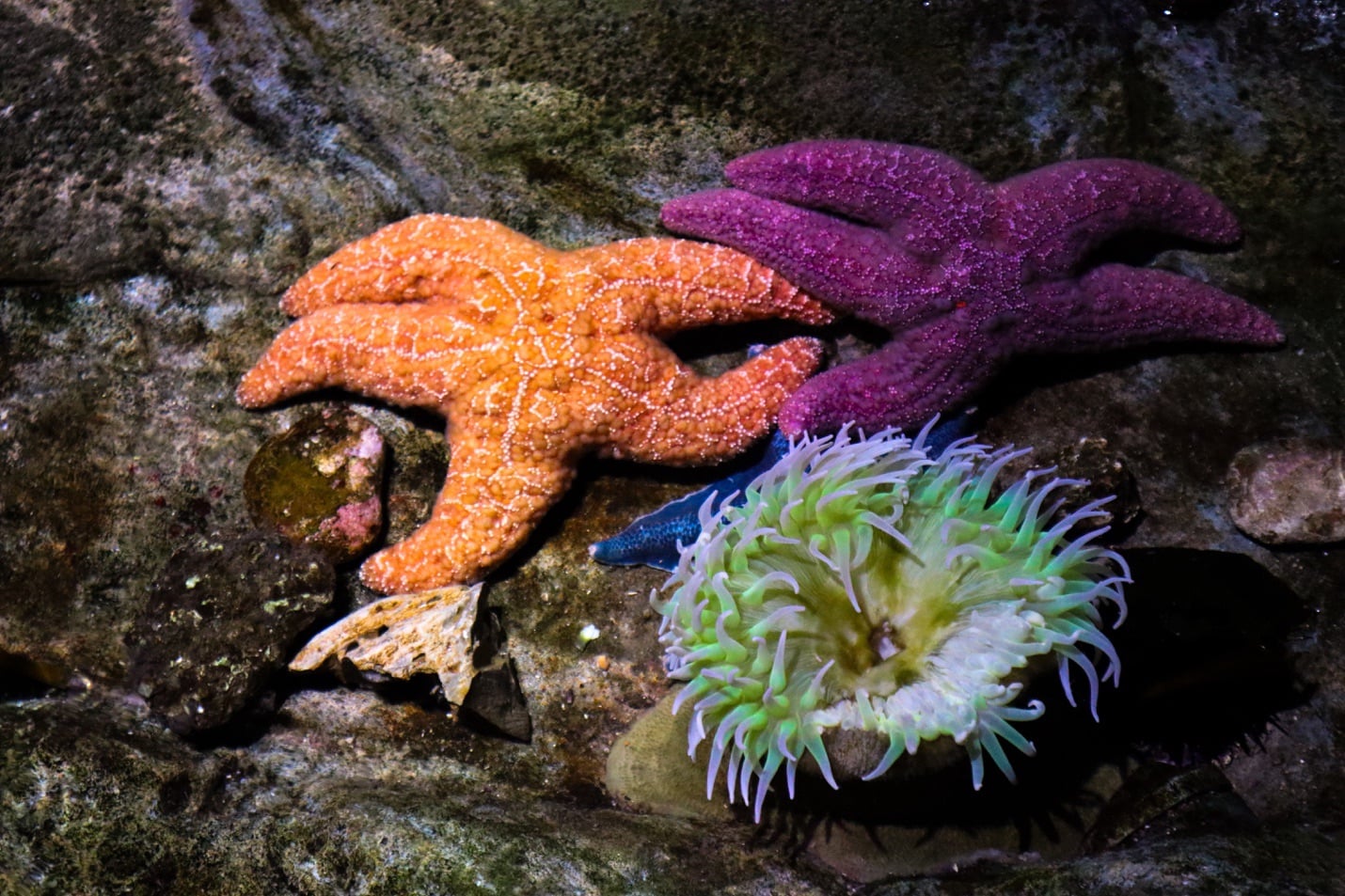
The Aquarium of the Pacific in Long Beach, California welcomes over 1.6 million guests each year, not just because of the more than 12,000 marine animals across over 500 species, but also for its immersive exhibits like, “Our Water Future,” which show visitors how their everyday habits affect global water use.

The aquarium has always valued and prioritized sustainability, according to information services specialist, Emily Smith, 24. Smith has worked with the aquarium since 2021.
“Our department is constantly working on cultivating all kinds of ways to help our environment and be a front runner,”
The Aquarium of the Pacific was the first among all museums, zoos, and aquariums across the United States to report their greenhouse gas emissions and has been recognized as a Climate Action Leader in their practices since 2007, according to the Association of Zoos & Aquariums. Through these efforts, the non-profit organization has cut its carbon footprint nearly in half and now saves 960,000 gallons of water annually.
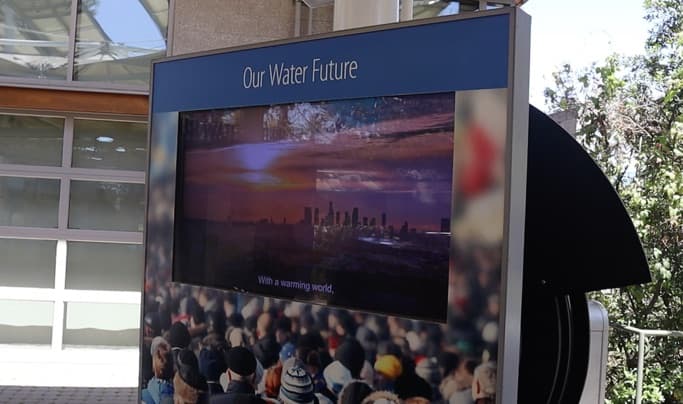
Apart from their sustainable practices, the aquarium offers exhibits that educate visitors about resource consumption. One of these is called, “Our Water Future.” This is an interactive exhibit that explains water’s origins and highlights the importance of conservation. The exhibit provides visitors with practical tips for reducing water usage through small lifestyle changes.
Examples include switching to Energy Star appliances like a dishwasher and washing machine which can use less than half of the amount of water as older models. Even simple changes like turning off the tap while shaving or brushing your teeth can save several gallons each day.
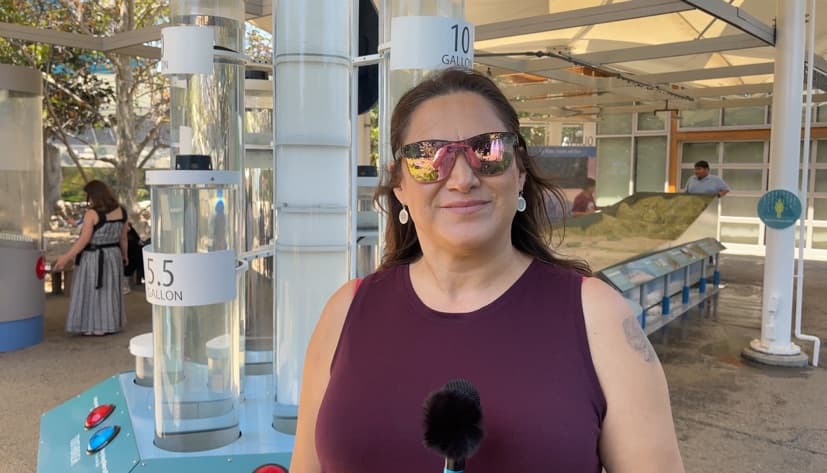
First-time visitor of the aquarium, Theresa Pots-Thomason, 63, stumbled upon this exhibit and had the chance to learn about water conservation efforts with her family.
“I’ll probably use less, because I know I use a lot of water,” she said.
Pots-Thomason added that her family already uses some Energy Star appliances at their home in Nevada.
“Our water company breaks it down for us, so we know what’s being used,” she said. “Our bills went down slightly because of the appliances.”
Efforts like these are crucial in fighting against climate change. Platforming the benefits of them to visitors has the ability to leave lasting impressions that can lead to real solutions.
The exhibit not only educates visitors about the importance of minimizing the waste of fresh water but also offers a hands-on experience that motivates visitors to act. Guests like Alejandra Barba, 18, an aspiring scientist interested in the biology field left feeling inspired.

“It makes me want to waste less water because it helps everybody, not just me,” Barba said. “You think about people in other parts of the world and how much they’re really using compared to us.”
The CDC reports that the average American uses about 156 gallons of water per day. In contrast, countries like France average 77 gallons per person, India less than 40, and individuals in developing nations like Mali, are reported to use just 3 gallons daily. These inflated trends within the United States, especially, put emphasis on the potential repercussions of this over consumption.
“At the current consumption rate, this situation will only get worse. By 2025, two-thirds of the world’s population may face water shortages. And ecosystems around the world will suffer even more,” according to the World Wildlife Fund Organization.
These terrifying realities reveal the urgent need to preserve water even more than before and exemplify the need for organizations like The Aquarium of the Pacific to continue focusing on these issues. Taking these extra steps and platforming this information to guests within the aquarium can help shape a more sustainable water future.