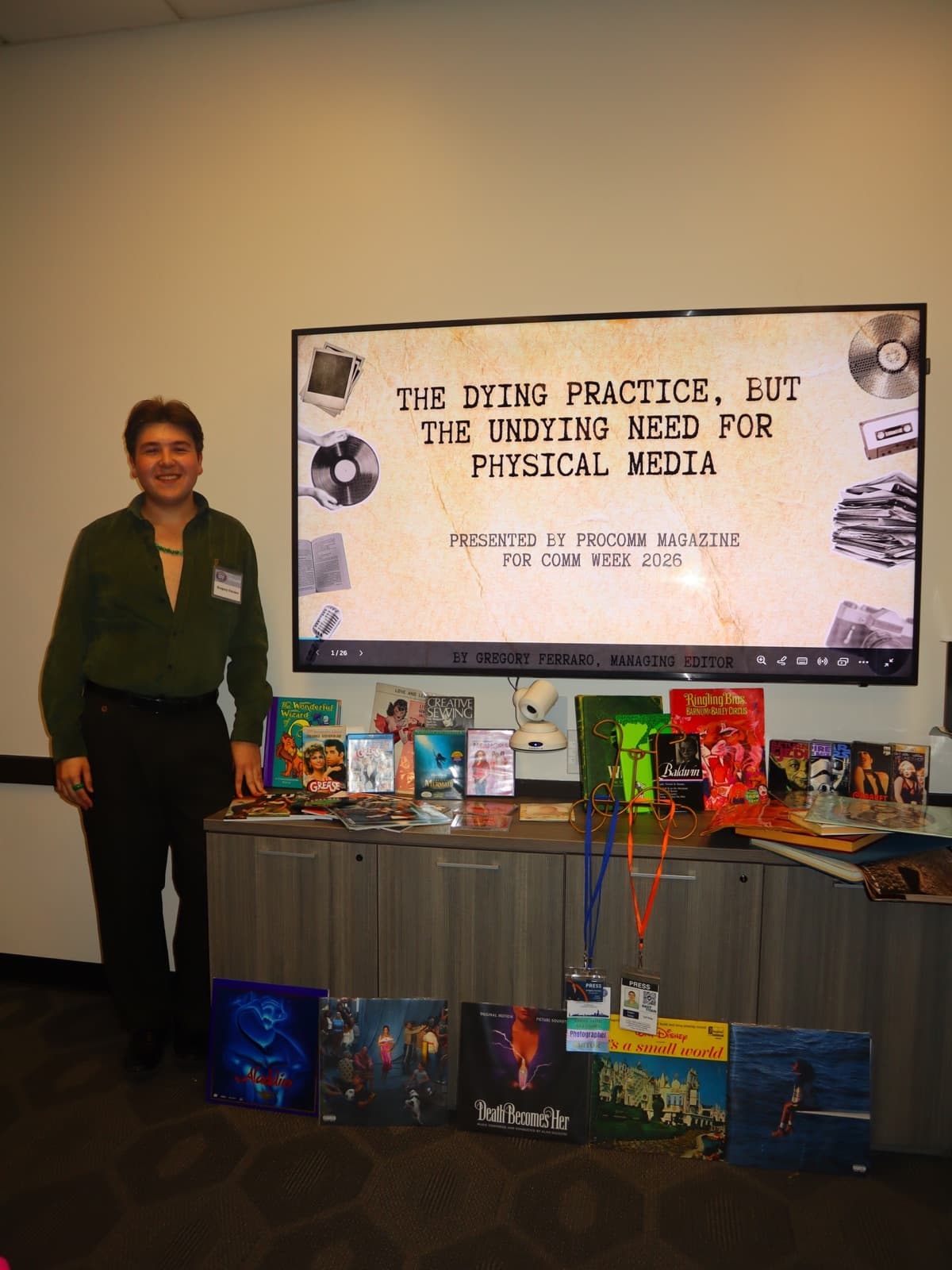
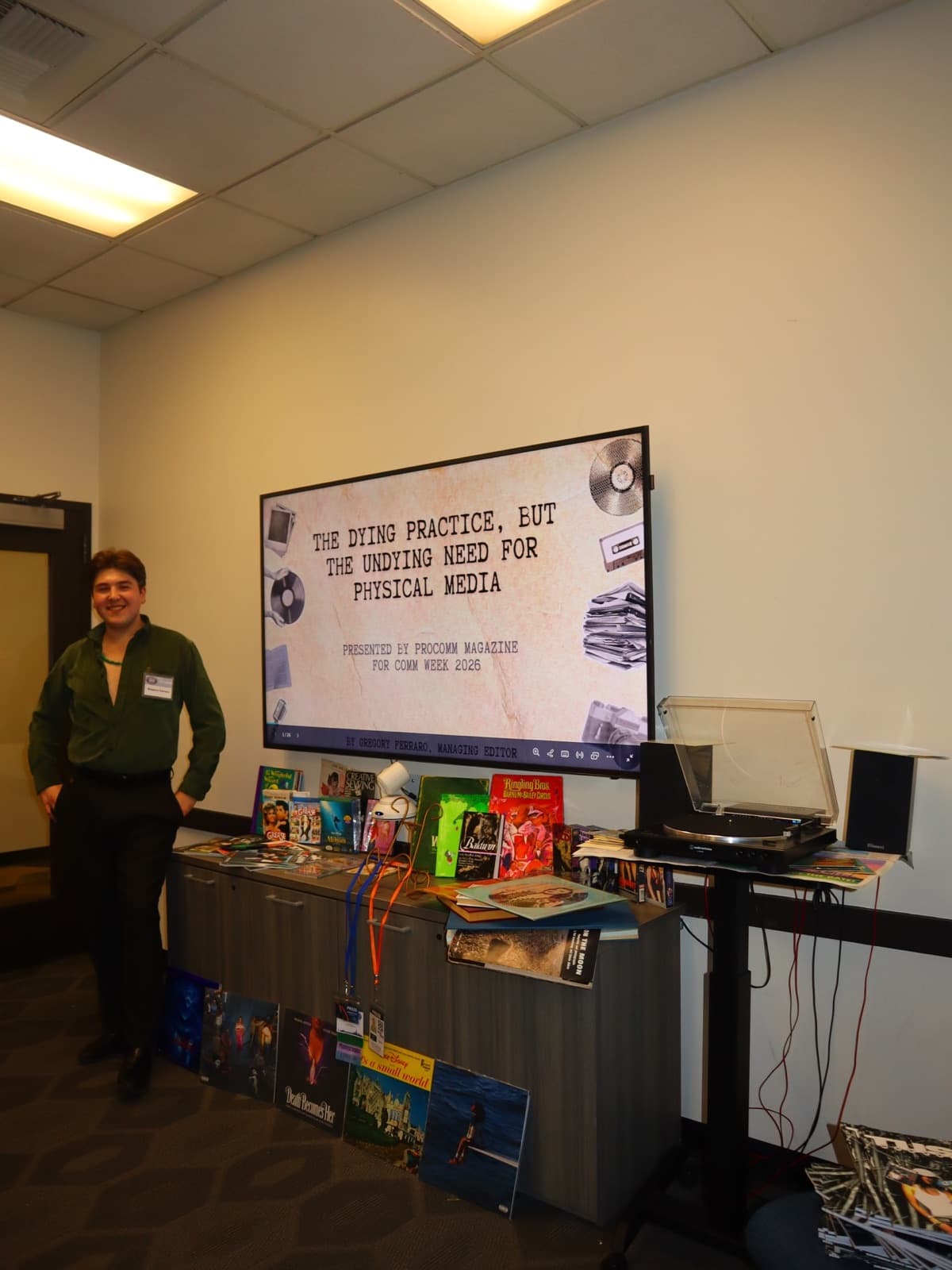
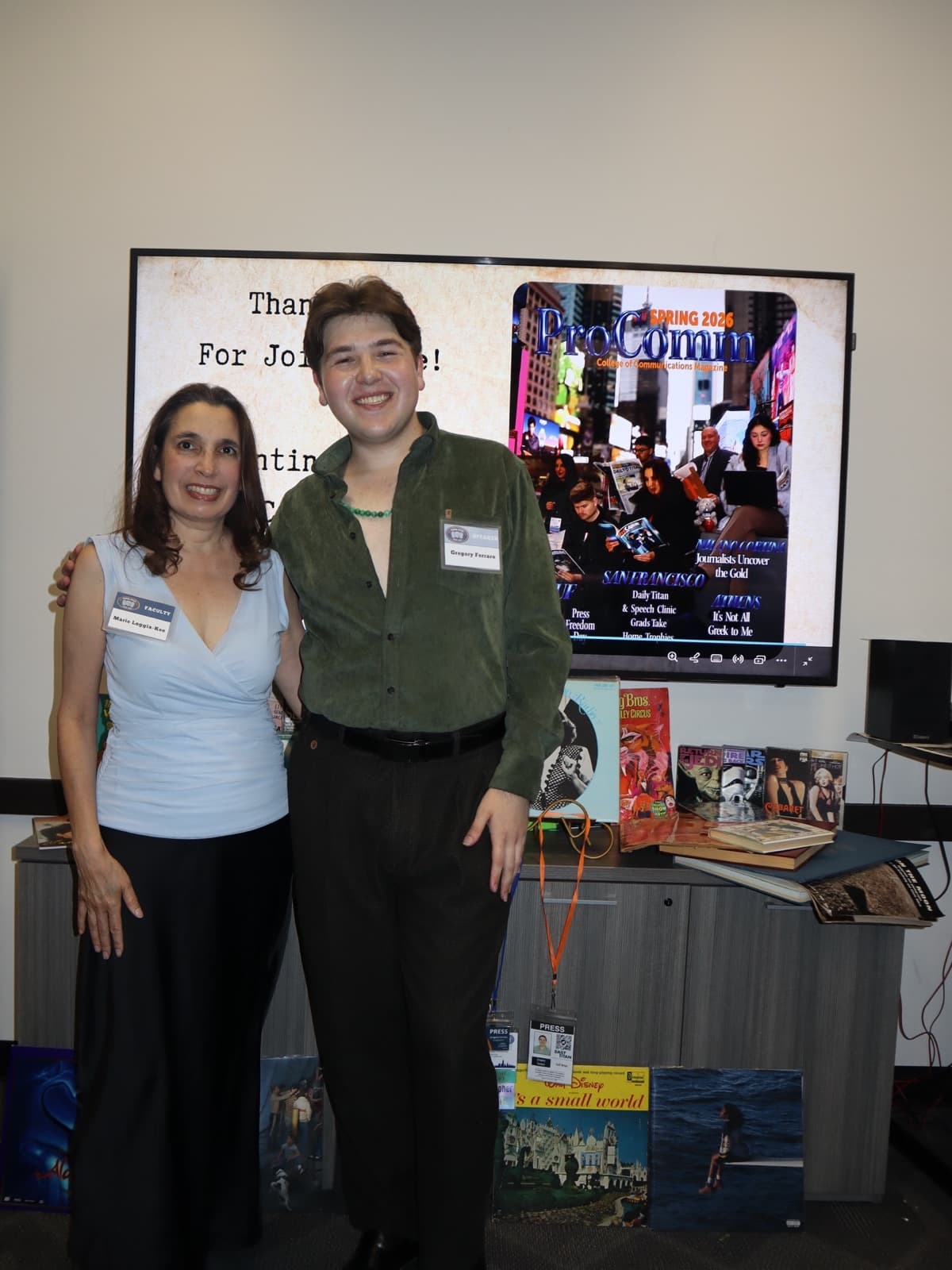
The Dying Practice, but the Undying Need for Physical Media
The issue’s closing message: why print and tangible media still matter in an ever-evolving digital world.
Written by Gregory Ferraro for ProComm Magazine
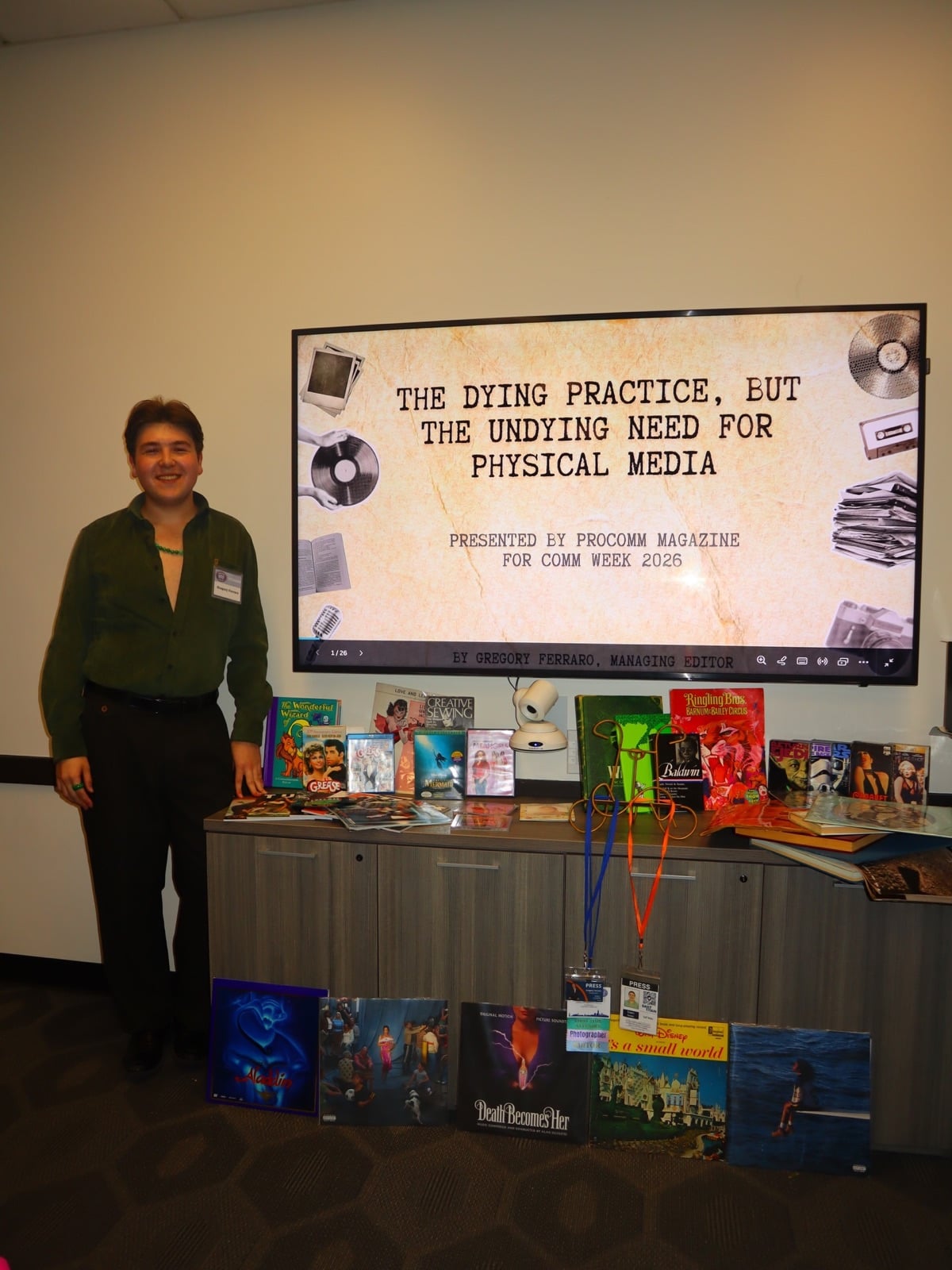
As it ran in print
Inside back cover
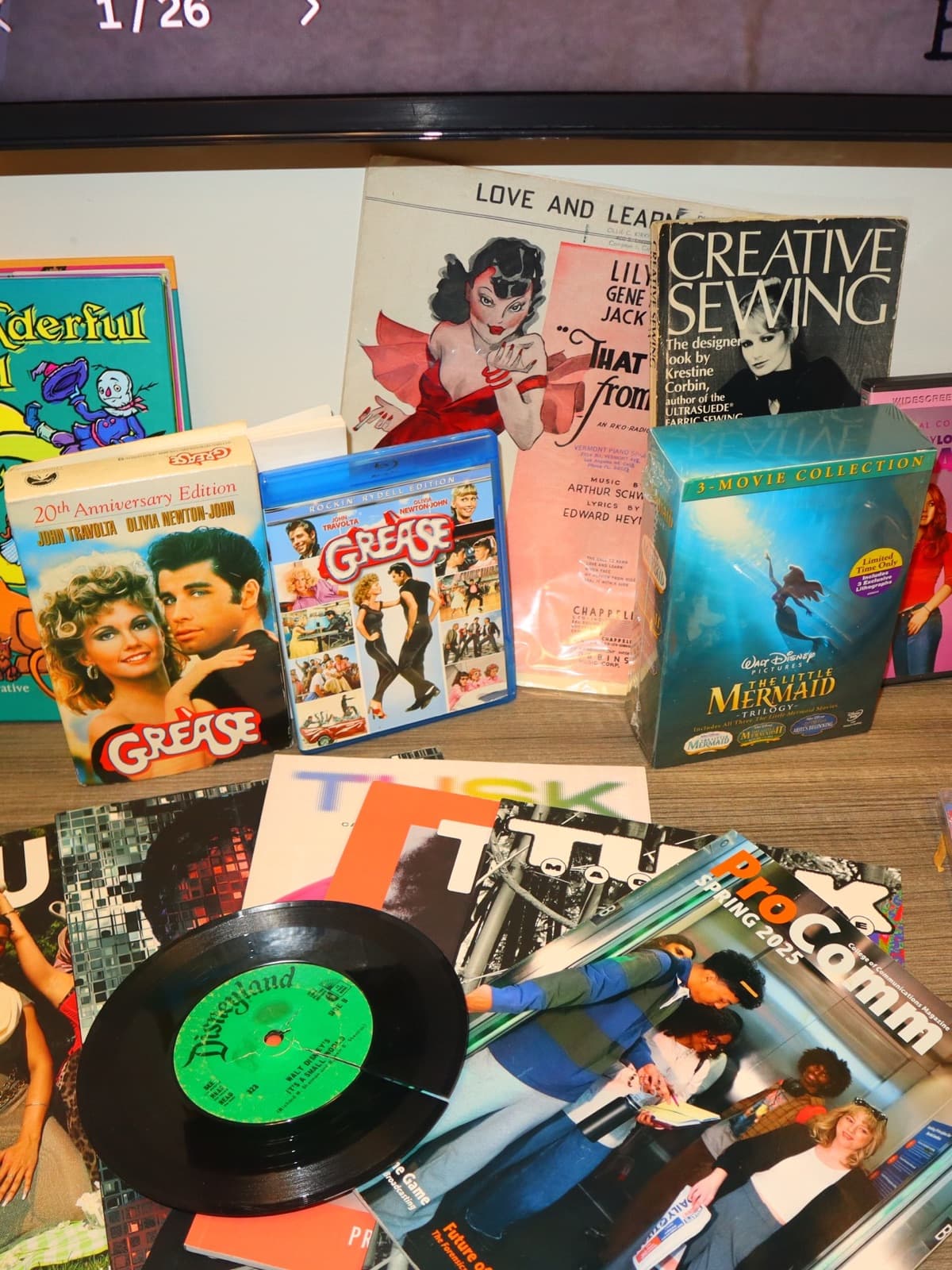
In this ever-evolving and increasingly digital world, the use and preservation of physical media is being swallowed whole. With endless libraries of music, books, films and television shows available at a single click, news organizations updating exclusively online and media consumption shifting toward short-form content, the need for tangible media has been repeatedly questioned. Convenience has become the default, and the physical objects that once defined how we consumed information are now treated as relics of a lost era.
As a student-led print publication, ProComm Magazine upholds a practice many universities have already abandoned, physical media. Cal State Fullerton’s College of Communications supports multiple print outlets, giving students the rare opportunity to create tangible work. That commitment is strongly supported by Dean Jason Shepard, who has long emphasized the importance of preserving tangible forms of communication.
“We certainly live in a digital world and that makes communications so much more accessible and gives an individual the ability to find really anything they want at the touch of their fingers in their phone,” Shepard said.
“But I’m still a giant fan of physical media. I subscribe to a print newspaper, I collect books and I still read printed books because the tangible act of engaging with media remains important.”
That commitment to tangible storytelling is echoed by a support from faculty who have spent their careers immersed in physical formats. Dr. Waleed Rashidi, an associate professor of communications at CSUF, has worked in music journalism and the entertainment industry for decades.
Rashidi’s perspective comes from years of working with physical formats as both a collector and a professional in the music industry. His experience has shown him how easily cultural history can disappear when it is not preserved.
“We have lost information, and we have lost music, because some of these publications become completely impossible to find and they were never placed online,”
“If they were not archived, then it becomes very difficult to retrieve that information.”
He brings that understanding into the classroom, helping students see the history and evolution of the formats they often take for granted.
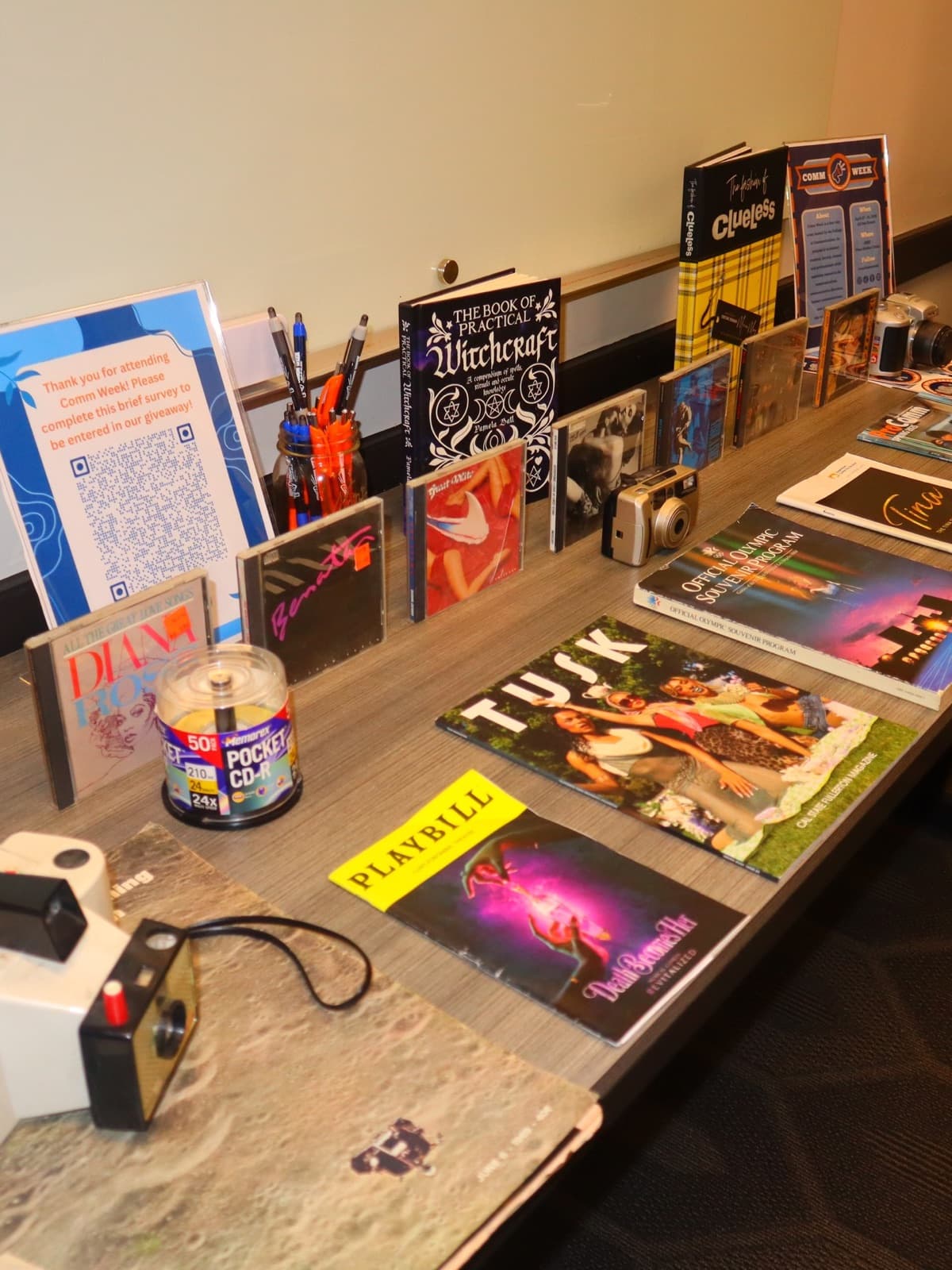
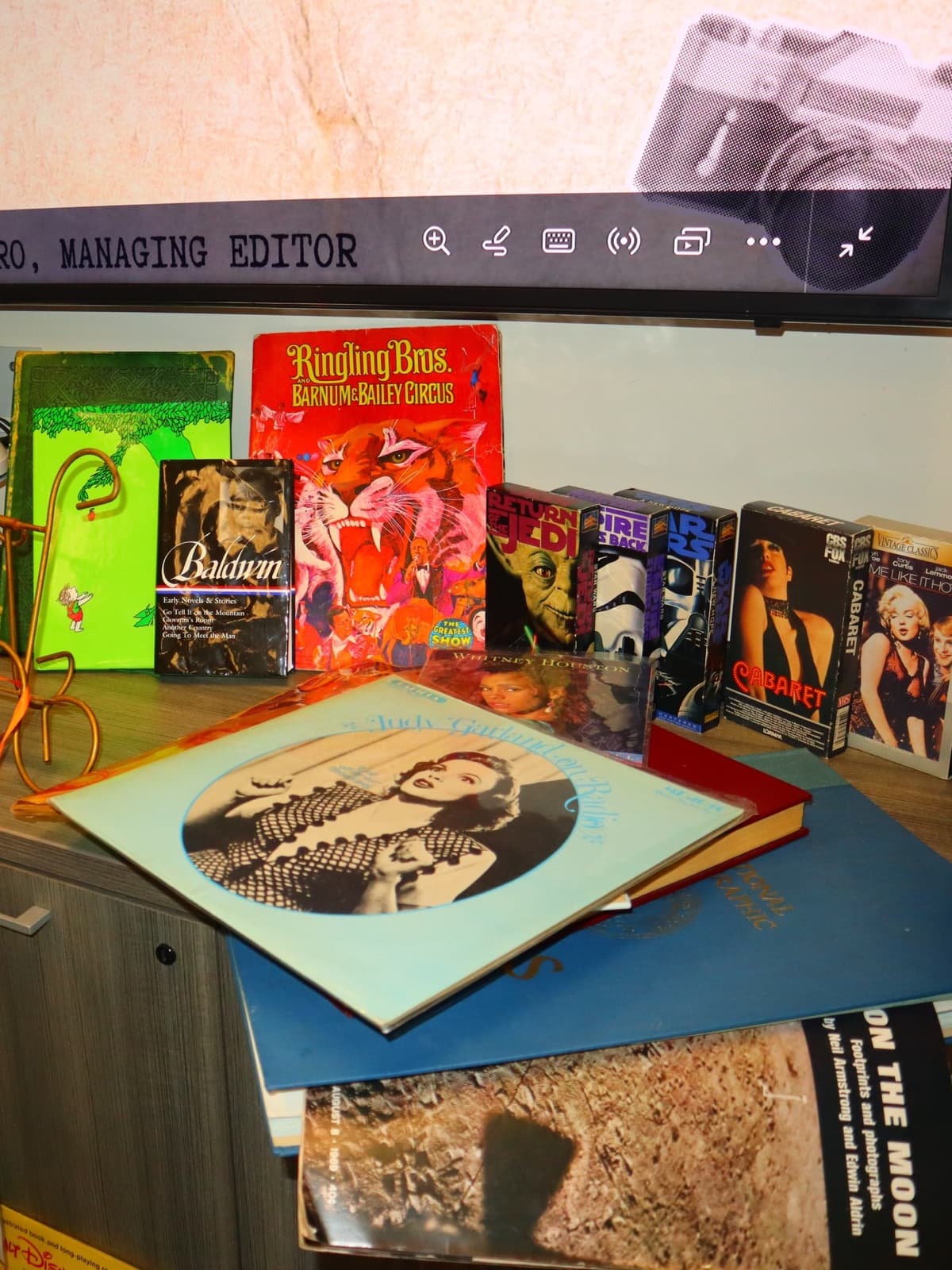
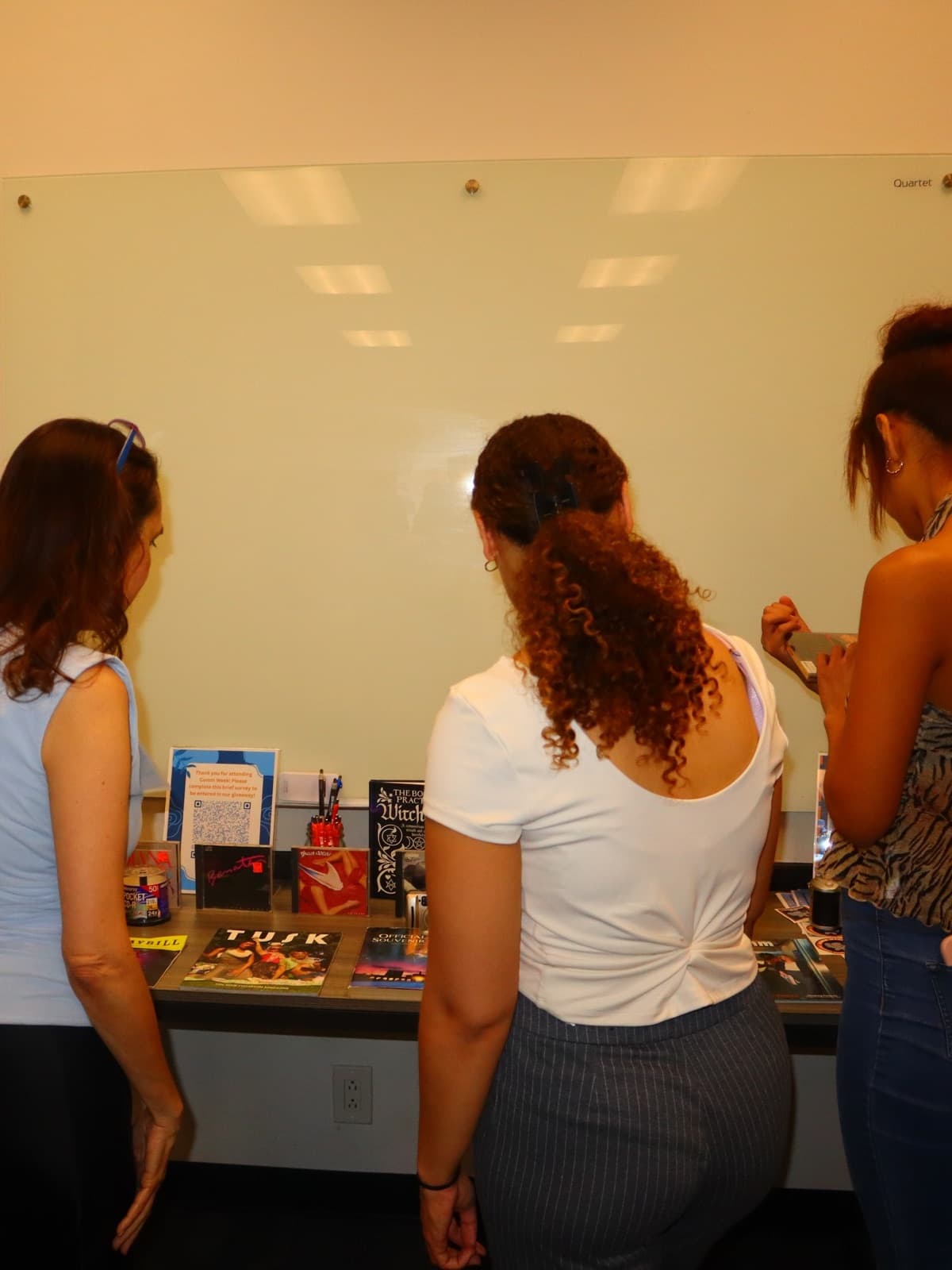
“I literally bring in physical media for them to see. I brought a vinyl record, I brought a cassette tape, I brought a CD and I also brought a master reel,” he said. For students, that hands-on exposure becomes a reminder that media has weight, texture and history, qualities that can’t be replicated online. It gives them a sense of how earlier formats were built, handled and experienced, grounding their understanding of modern media in something physical and rooted in tradition. CSUF’s commitment to physical media allows students to create work that endures, grounding their development as storytellers in care, tangible experience and a sense of permanence in this fast-moving digital world.