
AI and Criminal Justice: Arguing Alongside Seamus Miller
Why unregulated facial recognition threatens privacy, autonomy and safety in a democracy.
Written by Gregory Ferraro for GF Creative House Blog
Throughout Seamus Miller’s argument “AI and Criminal Justice- Individual Autonomy, Joint rights, and Collective Responsibility” his claim that the increased use of artificial intelligence facial recognition software could violate our privacy, autonomy and safety as a democracy is correct. Over the past couple of years, AI has been integrated into nearly every aspect of our society, providing people with unprecedented access to knowledge and resources, but it has also raised many urgent ethical concerns. Its potential privacy, autonomy and safety violations pose major threats for citizens and I argue that unless AI facial recognition is tightly regulated its implementation threatens democratic stability.
Throughout this paper I will be arguing alongside Miller by calling attention to the many social, ethical and political dangers that could arise if use of this software by governments and corporations is not regulated to protect the rights of citizens. This argument explores and examines five key risks related to AI facial recognition software including how it enables the government to have unnecessary surveillance capabilities, AI policing’s disproportionate affects and targeting directed at marginalized communities, the violations of citizen’s freedoms, the fact that the rights of many outweigh the crimes of one and that there is a high risk of error and mistakes because of the freshness of the technology. Each of these concerns should be taken into consideration before increasing the integration of these tools. If facial recognition technology continues to be implemented without careful regulation, transparency, or ethical safeguards, it will negatively impact everyone.
The government already has massive amounts of control over citizens. With The Patriot Act, or the Uniting and Strengthening America by Providing Appropriate Tools Required to Intercept and Obstruct Terrorism Act, from 2001, citizens are already able to be closely monitored by government agencies for anything said that is assumed to be terroristic. This excess monitoring has been speculated widely by many because of the potential for misuse. The Patriot Act normalized broad surveillance powers in times of fear for citizens, and AI facial recognition threatens to expand them even further in another time of heightened division. Miller discussed the possibilities that could occur if facial recognition software takes a stronger grip. He said, “Biometric facial recognition systems can be integrated with the closed‑circuit television systems that already exist in public spaces to search for, identify, and thereby track people in real time” (Miller 215). This tracking capability would completely eliminate privacy and turn every public space into a police lineup. Such capabilities shift power dramatically toward the state, undermining the checks and balances that are essential to democracy. This leans closer to authoritarian control as the government would have unprecedented power to track individuals in real time.
Places like China are already integrating this technology. Their changes demonstrate how quickly facial recognition can evolve from a security tool into a mechanism of social control. Miller mentioned, “The expanding use of this technology in law enforcement, border protection, and national security contexts raises a number of pressing ethical concerns for liberal democracies. Moreover, the fact that this technology is already in widespread use in authoritarian states, such as China in the context of its social credit system, raises the specter of its widespread use in liberal democracies” (Miller 214). This issue is very alarming as the accessibility of their society is being altered by the imposition of AI. While the U.S. is not an authoritarian state, adopting similar technologies without careful consideration, risks replicating the negative aspects of that model. If the government begins implementing AI facial recognition for criminal activity who knows where it could end and who it could ultimately affect.
Marginalized communities within American society are often not even considered in issues like these because of the stereotypes that plague and discredit many of their struggles. Because AI learns from historical policing data, it reproduces the same racial disparities embedded in that data. The excess policing of certain communities will only be amplified by advancements in technology. Miller argues that,
“Communities that have been overpoliced in the past are likely to continue to be overpoliced… especially… poor Black neighbourhoods in the United States”
An algorithm shouldn’t have the ability to determine the livelihood of vulnerable communities. If it were to be further implemented, AI would amplify existing inequalities rather than correcting them, making marginalized communities even more at risk. When certain communities are disproportionately targeted, the promise of equal protection under the law then becomes hollow. AI’s ability for neutrality is destroyed as well because it reflects and reinforces the social and political contexts that have already existed and already failed. This takes the meaning from the claim of alleged “freedom” that has been built into the framework of America.
AI integration in this way would remove freedom by destroying the autonomy of citizens. Increased implementation of this form eviscerates freedom assuming that everyone is a target to be surveilled. Beyond Miller’s examples, current global conflicts reveal the dangers of deploying AI in high‑stakes environments. According to Human Rights Watch the Israeli Military has already begun implementing this technology and has been using biometric AI facial recognition software to determine their attacks in Gaza. They found that as many as four digital tools that have been implemented to harm and persecute Palestinians in Gaza use faulty data and inexact approximations. In a document based on information directly from investigators and Israeli officials, Human Rights Watch details that, “The Israeli military’s use of these digital tools risk Israeli forces violating international humanitarian law, in particular the laws of war concerning distinction between military targets and civilians, and the need to take all feasible precautions before an attack to minimize civilian harm.” This case illustrates how AI errors can have catastrophic consequences when used in military or policing contexts.
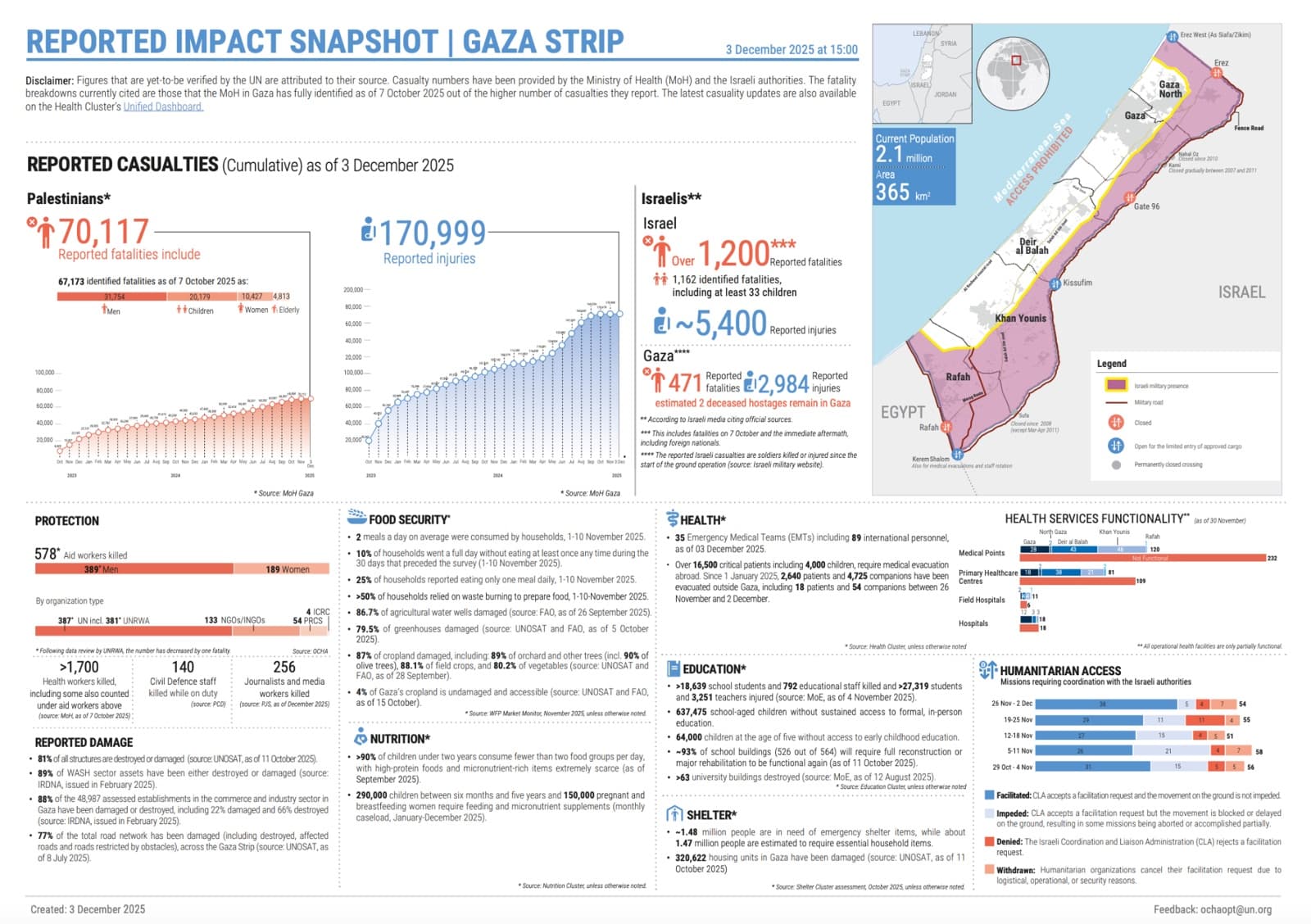
With the death toll of Palestinians reaching over 70,000 and over 80% of all structures having been destroyed according to the United Nations Office for the Coordination of Humanitarian Affairs, the AI is either extremely faulty or trained to eliminate. With testing of this technology being used on these vulnerable populations, who knows what the extent of their implementation could be on our own society. There is more of a collective responsibility to regulate the government’s ability to implement AI then there is a collective responsibility to submit and allow free reign.
The potential violation of citizens' privacy and safety are more important than the ability to catch an individual criminal. Miller argues,
“Large‑scale violations… can lead to a power imbalance between the state and the citizenry and… undermine liberal democracy itself”
Biometric data can be compelled without consent, raising questions about self‑incrimination protections. If people are innocent until proven guilty in our legal system, then why would anyone allow AI to destroy that right through surveillance. All human rights could be violated through this increased control that many don’t even know the full extent or potential of. Courts have already ruled that police can force individuals to unlock phones with facial recognition, blurring the line between evidence and compelled testimony.
The collective harm of mass surveillance outweighs the individual benefit of solving isolated crimes. Raising fears of citizens to make them believe this level of control is even necessary borders on fear mongering that works to divide our society even further. When governments justify surveillance by invoking fear, citizens may accept intrusions they would otherwise reject.
While some may argue that AI integration is only beneficial and leads to higher efficiency and accuracy, this has been proven to be false and also misleading. If past policing overlooked certain crimes or communities, AI will overlook them too, creating even deeper blind spots. AI is still such a new creation that its reliability is very questionable. It also is using previous information to determine the potential outcomes of future situations, so this style of surveillance is just predicting and assuming. The efficiency that is afforded by AI’s speed is reversed by its need for excessive verification. Miller said, “Predictions of future crime using machine learning techniques are based on the past… offenders and offense types that have escaped detection in the past… are less likely… to be targeted by police” (209). This underscores the potential for mistakes and inaccuracies. Also increased efficiency in our democracy also translates to less jobs as AI poses to wipe out many jobs in our workforce. Until these systems can demonstrate accuracy, transparency, and fairness, their risks outweigh their benefits.
AI facial recognition implementation poses many immense risks to the promise of democracy and citizen’s rights. Without excess regulation, these systems will continue to expand faster than our ability to control or understand them. If we fail to regulate AI, we fail in our responsibility to protect one another’s rights. No technological convenience is worth sacrificing the dignity and safety of vulnerable communities. Until AI can guarantee accuracy, fairness, and transparency, it has no place in systems that determine people’s freedom. The choices we make today will determine whether AI becomes a tool for advancement or control. Protecting our rights requires vigilance, participation and a refusal to accept surveillance as inevitable.
Sources
- Human Rights Watch. “Questions and Answers on the Israeli Military’s Use of Digital Tools in Gaza.” Human Rights Watch, 10 Sept. 2024, www.hrw.org/news/2024/09/10/questions-and-answers-israeli-militarys-use-digital-tools-gaza.
- Miller, Seamus. “AI and Criminal Justice: Individual Autonomy, Joint Rights, and Collective Responsibility”. Ethics in the AI, Technology, and Information Age, eds. Michael Boylan and Wanda Teays, Rowman and Littlefield, 2022, pp. 207-216.
- United Nations Office for the Coordination of Humanitarian Affairs. Gaza: Reported Impact Snapshot, 3 December 2025. UN OCHA, 2025, https://www.unocha.org/attachments/ac114d3f-2086-4dab-aeee-c3106cf4c9b3/Gaza_Reported_Impact_Snapshot_03_December_2025_final.pdf..